Alibaba


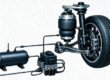
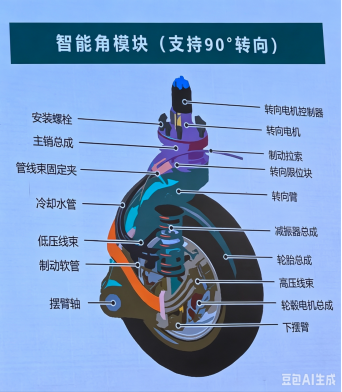
A car that pivots on the spot, crabs sideways, or drives diagonally — behind all three maneuvers lies one component: the intelligent corner module. Drive motor, reducer, steer-by-wire, brake-by-wire and active suspension are all packaged into the wheel end, with mechanical coupling left to software: four wheels become four independently controllable actuators.
At an intelligent chassis symposium earlier this year, several leading companies laid out their R&D status and mass-production timelines in the open. The corner module is no longer just a concept.
1. Two Configuration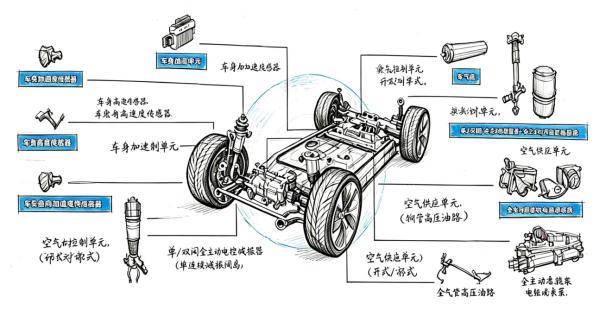 Routes
The kingpin-type layout pairs with a double-wishbone suspension. The wheel pivots about the kingpin, giving it a large steering angle — this is what makes zero-radius turning possible — along with a high level of integration. Most mainstream OEMs have taken this path. The tie-rod layout steers through left and right pull rods. The structure is flexible enough to enable diagonal travel and lateral translation, at the cost of a more complex mechanism and tight packaging space.
Drive architectures split into two camps. The in-wheel motor drives the wheel directly: the structure is compact, but unsprung mass is high and heat dissipation is difficult — two shortcomings that have yet to be fully resolved. The wheel-side motor with a reduction gear shrinks the motor envelope and eases unsprung mass, but places higher demands on drivetrain efficiency.
Deployment follows an easy-to-hard sequence. Low-speed logistics movers and enclosed-campus shuttles serve as the testbed first, while passenger-car programs are in intensive development. Industry discussions generally put the mass-production window between 2027 and 2028.
2. Four Engineering Hurdles
Unsprung mass and handling. With the motor, reducer and brake all pushed to the wheel end, unsprung mass climbs, and handling stability and ride comfort take the direct hit. Lightweighting is the first-order challenge.
Heat dissipation and reliability. The wheel end is an enclosed space, and heat from high-power motors and brakes has nowhere to go. Sustained high temperatures put material durability and thermal management to the test.
Functional safety. Steering, braking and drive — three safety-critical systems — are squeezed into a single assembly, and the failure of any one subsystem can trigger a chain reaction. Achieving ASIL-D and building multi-level redundancy is a precondition for mass production.
E/E architecture. 800V high voltage coexists with 48V/12V low voltage, and the domain controller must coordinate the real-time response of four actuators at once. Both communication bandwidth and power-supply design have to be recalculated.
3. The Validation System Changes Track
Corner-module test volumes run an order of magnitude beyond those of a conventional chassis, and the old approach of buying time with piled-up hardware validation can no longer keep up. Software algorithms, fail-safe boundaries and cross-system coordination have become the new center of gravity for validation.
Leading companies are pushing verification toward the front end of design, using high-fidelity digital twins to expose problems early in virtual environments. Model-in-the-loop, software-in-the-loop, hardware-in-the-loop and vehicle-in-the-loop are being laid out in sequence, turning what used to be serial trial and error into parallel progress.
The four hurdles, plus the shift in validation, are the gates the corner module must pass right now. Hardware is not the hardest of them. The hard part is this: once software holds control of all four wheels, every failure scenario still needs a fallback.
4. Wheel-End Integration: Lubrication Squeezed into a Palm-Sized Space
The corner module compresses lubrication points once scattered across the conventional chassis into the wheel end. Drive-motor bearings must withstand high speeds, high temperatures and media attack. Reducer gears and bearings demand long life and high load capacity.
The screws and gears of brake and steering actuators must absorb shock and vibration. And the sealing layer must keep out water and dust while remaining compatible with rubber materials. As power density keeps climbing, insufficient lubrication shows up as bearing failure and accelerated gear wear. The reliable service life of a corner module is held in the grip of these unremarkable small parts.

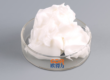
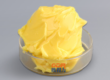
Across the wheel-end lubrication points, ODR’s matched products for braking, steering and suspension can be combined directly:
- EMB gearbox and ball screw:ODR-CH641E(-45 to 180 °C), compatible with EPDM seals.
- ODR-CKZ2606E(-40 to 150 °C) and ODR-C304 (-40 to 180 °C): compatible with HNBR seals.
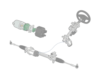
- Steer-by-wire ball screw:ODR-CE16(-40 to 200 °C), low friction and fretting-wear resistant.
- Active stabilizer-bar mechanism:ODR-CY921(-40 to 180 °C), built to withstand frequent direction reversals.
- Shock-absorber polyurethane slider assembly:ODR-CU2744(-50 to 150 °C).
Drive-reducer gears and motor bearings are matched and sampled individually according to speed and load — just send us your duty cycle.