Alibaba


“GB 21670-2025 Technical Requirements and Test Methods for Passenger Car Braking Systems” took effect on January 1 this year, officially opening the first year of EMB mass production. As recently as last December, forums on Auto Brake Network were still debating who would be the first to put an EMB into a production car. Then, on February 6 this year, Li Auto announced that the L9 Livis would be equipped with Bethel Automotive’s EMB system; on April 19, Chery, together with Orient Motion, launched the Exeed EX7 — the world’s first mass-produced vehicle with EMB. From concept validation to a car on the road, China needed only a few years to cover ground that overseas suppliers had failed to cover in more than a decade. At the ATC Shanghai Chassis Exhibition and the Changzhou Intelligent Chassis Symposium in June, every player laid its mass-production cards on the table.
Where It Is Faster, Where It Saves
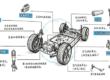
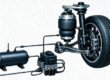
EMB eliminates the hydraulic lines and the master cylinder. The motor is integrated directly into the brake caliper, and a screw drive delivers the braking force. Three accounts stand up. Response: a conventional ESC takes about 550–600 ms; One Box compresses that to 150–300 ms; and EMB breaks through the 100 ms mark — some suppliers’ measurements show an improvement of more than 40% over hydraulic solutions, opening a time window for the predictive control of intelligent driving. Drag: clamping force is closed-loop controlled by the motor, so drag-release response drops from 0.8 s on a hydraulic caliper to about 0.29 s; the vehicle slips into coasting sooner after the brake is released, which directly benefits the range of new energy vehicles. Control: EHB is still centralized hydraulics at heart, with four-wheel distribution adjusted passively by solenoid valves; EMB’s distributed architecture is inherently independent at each of the four wheels, enabling fine-grained dynamics regulation together with the domain controller.
The Safety Account: From Fail-Safe to Fault-Operational
EHB is designed around fail-safe: when the system fails it degrades quickly, and braking force depends on the driver’s right foot. In an emergency, an ordinary driver may not be able to generate enough pedal force — an inherent weakness of the old approach. EMB follows the fault-operational route, and production solutions generally adopt triple redundancy: power supply uses a full-domain dual supply with seamless switchover within 5 ms if one path fails; on communication, every node is given dual CAN channels, so a single-path fault does not affect function; on the control side, the pedal module independently retains basic braking and ABS capability, so the car can still be brought to a safe stop even if the domain controller fails completely. In one supplier’s tests, with the dual calipers on one side failed, the vehicle still achieved more than 1G of deceleration; with both calipers failed at the same time, combined with electric-drive braking force distribution, it still managed 0.64G. This level of safety goes beyond the baseline required by industry standards.
How Thick Is the Mass-Production Ledger
The ledger behind a first-to-market product is thicker than many expected: setting benchmarks in product design, setting benchmarks in application standards, developing production-line processes, and restructuring the tier-2 supply chain — four efforts running in parallel. The validation investment is even more relentless: vehicle road testing of more than 4 million kilometers, covering high temperature, extreme cold and high altitude; EMC testing across 219 scenarios, 139 usage cases and more than 40 types of wireless signal waveforms; vibration durability shaking seven days and seven nights, at 15G vertical and 10G horizontal; mechanical shock at 100G; high-temperature operating endurance of 4 million cycles; and more than 2,000 samples for material validation alone. Any one of these numbers is punishing on its own; stacked together, they are what gives EMB the confidence to go first.
EHB Will Not Exit Anytime Soon
The industry consensus is that EHB and EMB will coexist for a considerable period, with most automakers following a path of applying one generation, developing one generation and reserving one generation. In the near term, EHB plus a domain controller remains mainstream, striking a good balance between cost and performance. In the medium term, as EMB costs come down and its supply chain matures, four-wheel independent EMB will gradually penetrate. In the long term, look to steer-by-wire plus EMB plus in-wheel motors, with the vehicle’s X, Y and Z axes fully decoupled. Differentiation in the next generation of intelligent chassis will hinge on whether precise stability can be held in nonlinear regions — slippery roads, rough roads, slopes. Whoever can keep its control system steady in the nonlinear region will define the floor of the intelligent chassis.
The Lubrication Account Inside the Caliper
EMB strips out the hydraulic lines, and the caliper is packed with a stack of precision motion pairs — motor, ball screw, gearbox. The lubrication conditions are far harsher than in a conventional caliper: under extreme conditions the brake disc can reach 650°C or even 750°C, with heat conducting inward through the housing; braking force is converted by the screw into an enormous axial load; vibration at the wheel never stops; and the design must also deliver low-temperature start-up efficiency and maintenance-free operation across the whole vehicle life cycle. This is exactly the window for domestic grease: EMB is a new architecture with no established import track record to copy, so imported brands and Chinese greases are accumulating data from the same starting line. ODR takes part in the discussion of EMB industry group standards and national standards, works with dozens of domestic EMB R&D organizations on formulation and selection, and runs its own ball-screw test rigs together with multiple OEMs and research institutes on joint durability validation.
ODR Brake System Lubrication Solutions:
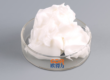
Passenger-car gearbox and ball screw: ODR-CKZ2606E (-40 to 150°C, HNBR compatible), high efficiency at low temperature, passed high-temperature durability testing; ODR-CH641E (-45 to 180°C, EPDM compatible); different seals call for different greases.
Dedicated for commercial-vehicle EMB: ODR-C608 (-40 to 180°C, extremely high load capacity and shear resistance, compatible with HNBR).
Piston seal assembly: assembly fluid ODR-C7003 (-40 to 150°C, compatible with EPDM/SBR, rust- and adhesion-resistant).
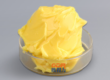
Piston and guide-pin assembly grease: ODR-C03G (-40 to 200°C); ODR-C8003 (-40 to 200°C, compatible with EPDM and brake fluid, validated by OEMs, long-lasting lubrication).
Brake pad backing plate and caliper spring anti-squeak: ODR-C79M (-40 to 260°C).
Grease: for a drop-in replacement of imports, choose ODR from China!