Alibaba


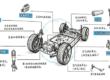
The rise of new energy vehicles has driven iterative upgrades across chassis and cabin actuation systems — and led more than a few component manufacturers into a selection trap: carrying over lubricating grease formulated for ICE vehicles, only to encounter abnormal noises, sticking, damaged seals and current anomalies after installation. The root cause lies in the fact that the operating environment of an NEV differs markedly from that of an ICE vehicle.
Full electrification of actuation. The electrical characteristics of lubricating grease have become a new selection criterion. Lubrication points around motors and electronic controls require grease that does not interfere with current signals and keeps current losses as low as possible; some locations must also account for effects on sensors and circuit boards. If selection considers only temperature and consistency, current anomalies can appear after installation.
A lower vehicle noise baseline. Without engine noise to mask them, braking squeal, seat-motor noise and door-lock gear noise are significantly amplified in an NEV, placing higher demands on the noise- and vibration-damping capability of the grease. Brake-pad anti-squeal grease, for example, must continuously suppress vibration noise under frequent braking and sharply fluctuating temperatures.
A changed thermal environment. The temperature field around the battery compartment and electronic controls is complex, and some chassis components face extreme cold in winter and high heat in summer — requiring grease with excellent low-temperature startability together with high-temperature resistance to volatility and coking. Ordinary grease tends to bleed and carbonize at high temperatures and harden at low temperatures, sending torque soaring; both directly affect actuator response speed.
ODR’s targeted solutions by system include:
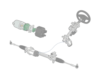
- Steering:EPS motor grease with a silicone-free formulation and low current loss, suited to plastic gears and metal-plastic composite friction pairs, with excellent low-temperature torque performance.
- Cabin interior and exterior:dedicated greases for door locks, glass run channels, power seats, headlamp adjusters and power-tailgate screws — reducing operating noise and preventing plastic aging.
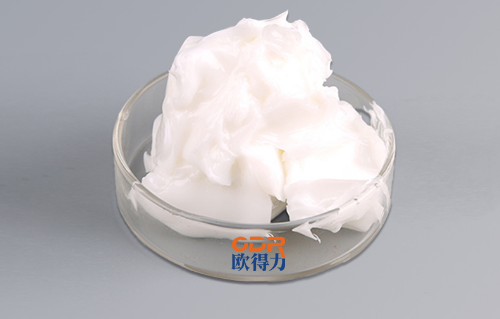
Powertrain: greases suited to e-drive reduction mechanisms — anti-wear and low-volatility, meeting the demands of high-temperature e-drive operation.
| System | Lubrication Point | ODR Model |
| Braking | EPB MGU gearbox | ODR-C184 |
| Braking | Passenger-car EMB dedicated (synthetic oil) | ODR-CKZ2606E |
| Braking | EMB gearbox (EPDM solution) | ODR-CH641E |
| Braking | Commercial-vehicle EMB dedicated | ODR-C608 |
| Braking | Brake-pad anti-squeal | ODR-C79M / ODR-C6003 |
| Braking | Caliper piston assembly | ODR-C7003 |
| Steering | Rack and pinion | ODR-CW70 |
| Steering | Worm gear | ODR-CKZ2066 |
| Steering | Electric steering column | ODR-C5004 |
| Steering | Screw / ball screw | ODR-CE16 |
| Cabin interior and exterior | Power seat rail / screw | ODR-BH371 |
| Cabin interior and exterior | Seat recliner motor | ODR-BB210 |
| Cabin interior and exterior | Window regulator | ODR-A08B |
| Cabin interior and exterior | Door lock / inner and outer door handle | ODR-A261 |
| Cabin interior and exterior | Power tailgate gearbox and screw | ODR-A02A |
| Powertrain | E-drive reduction mechanism | ODR-J10032 |
| Powertrain | E-drive reduction mechanism (planetary) | ODR-J2002 |
Many companies look only at temperature range when selecting grease, while overlooking key indicators such as rubber-plastic compatibility, electrical characteristics, volatility and oil separation. Lubricant selection for NEVs cannot rely on the parameter sheet alone — it must be matched and verified on the bench against actual operating conditions.
To learn more about our products and custom solutions, visit: https://www.odrgrease.com