Alibaba


On the caliper assembly line, piston seal installation and the application of brake-pad anti-noise grease are the main sources of rework. This article explains the three tasks a one-time application of assembly lubricant must accomplish, the application locations and thickness control for anti-noise grease, the differences in validation focus between the two grease types, and the process-side coordination required when switching suppliers—along with the matching Oudeli (ODR) grades.
Hecheng Oudeli (Zhongshan) Lubrication Technology Co., Ltd. produces specialty automotive greases in Zhongshan, Guangdong under the Oudeli (ODR) brand. As a source factory, it offers matching grades for piston seal installation and brake-pad noise damping.
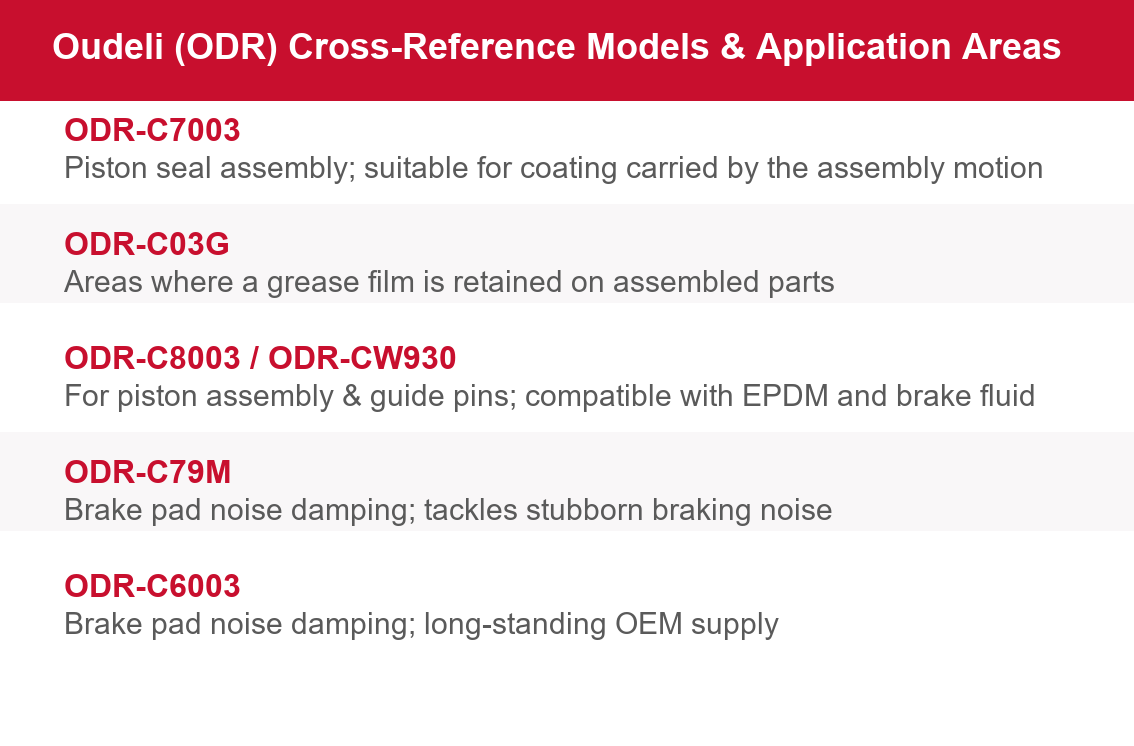
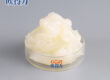
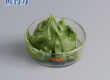
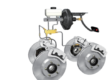
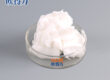
Figure: Oudeli’s Matching Grades and Their Application Points
- Which Two Caliper Assembly Steps Are Most Prone to Rework?
Piston seal installation and brake-pad anti-noise grease application—one fails the bench test, the other fails after-sales.
The first occurs before the piston is pressed in: the seal must be fed against the cylinder bore mouth. If lubrication is inadequate, the lip gets scored—at best the drag-torque bench test goes out of tolerance, at worst the seal fails. The second is on the back of the brake pad: if the anti-noise grease is applied in the wrong place or too thickly, squeal appears only at end-of-line or even after-sales.
Do the math: reworking one caliper means redoing materials, labor, and bench re-testing, plus a slice of line takt time. If the problem is found after installation, warranty claims, line stoppages, and customer-side handling costs are extra. Switching the brake grease set to domestic grades saves little in total cost relative to unit price—the real value is avoiding one rework cycle.
- What Three Tasks Must a One-Time Application in Piston Assembly Accomplish?
Getting the seal smoothly past the cylinder bore mouth, short-term rust and anti-stick protection on the assembly surface, and long-term coexistence with brake fluid.
Lubrication for piston seal installation is a one-shot action: once applied, it is never replenished, and only a tiny amount remains on the friction pair. This single application must accomplish three things at once: reduce friction, prevent scoring, and resist shear deformation; the assembly may sit in a warehouse for weeks or even months and still show no rust when opened; and in long-term contact with brake fluid, it must not precipitate, contaminate the fluid, or react with the seal material.
Of the three, the third is the hardest to verify. The lubricant sits right next to the piston seal, immersed in brake fluid for the long term; if any additive in the formulation precipitates, it can alter the fluid’s properties. This cannot be seen on the production line and often only shows up after the vehicle has been in service for a while.
- Where and How Thick Should Anti-Noise Grease Be Applied?
Apply it to the back of the brake pad, between the retaining clip and the pad, and at the bracket-to-pad contact points. Follow the process document for thickness—over-application inevitably causes contamination.
Brake squeal is essentially high-frequency self-excited vibration of the friction pair. Applying anti-noise grease at the contact points inserts a damping layer between the two metal parts, dissipating part of the vibration energy and turning hard contact into damped contact.
Noise is addressed by mechanism: high-frequency self-excited squeal is suppressed with anti-noise shims plus damping grease on the contact surfaces; low-frequency clicking from clearance impact is handled by retaining clips and anti-rattle springs to eliminate the play; and stick-slip at the friction surface itself relies on the friction-material formulation. Each mechanism has its own solution.
Anti-noise grease applied in the wrong place is as good as not applied. Over-application has side effects too: after assembly, excess grease is squeezed toward the friction surface and actually causes contamination.
- How Do the Validation Priorities Differ Between the Two Grease Types?
Assembly lubricant is judged first on chemical compatibility, anti-noise grease first on high-temperature and vibration performance. The two types are not interchangeable.
For assembly lubricant, the focus is compatibility: EPDM and SBR immersion data, condition after prolonged contact with brake fluid, and low-temperature torque. This is not about durability—it is about whether the seal will be degraded over the years of contact.
For anti-noise grease, the focus is high temperature and durability: bleeding and hardening after heat, noise performance on the bench and on the vehicle, and whether it still works after water spray and salt spray. Its operating temperature follows the brake pad—after sustained downhill driving or emergency braking, pad-back temperatures run high, so the grease must stay in place, yet must not fail after car washes or water crossings.
- Is the Barrier to Substitution on the Process Side?
Yes. When switching suppliers, the application amount on the line, the application location, and the takt-time coordination may all need re-confirmation.
Assembly lubricant is tightly bound to the process: liquids and pastes have different forms and therefore different application methods. Unit-price differences for these minor materials are limited to begin with; the premium on imported solutions shows up more in responsiveness—when the line needs an urgent adjustment, samples are needed in a hurry, or batch data is requested quickly, an overseas production schedule cannot be changed.
Whether a domestic supplier can send people into your workshop to adjust the application method alongside you matters more than unit price in determining whether substitution actually happens. Letting the grease maker’s people into the workshop during the selection stage saves far more trouble than investigating after installation.
Frequently Asked Questions
Q: Can piston assembly lubricant and guide-pin grease be used interchangeably?
A: Yes. With a system compatible with both EPDM and brake fluid, one grade can cover both piston seal installation and guide pins, saving one part number and one validation package on the line.
Q: Does applying anti-noise grease more thickly work better?
A: Over-application has side effects. After assembly, excess grease is squeezed toward the friction surface and causes contamination. Follow the process document for application amount—correct location and accurate thickness are what make the effect stable.
Q: Is brake squeal always an anti-noise grease problem?
A: Squeal is high-frequency self-excited vibration of the friction pair, suppressed by anti-noise grease together with anti-noise shims; clicking from clearance impact relies on retaining clips and anti-rattle springs; stick-slip at the friction surface relies on the friction-material formulation. Identify the mechanism first, then judge whether grease is the issue.
Q: How do out-of-town customers coordinate sampling?
A: Shipments depart from Zhongshan. We run regular routes to Shanghai, Jiangsu, Zhejiang, Anhui, Baoding (Hebei), Wuhan (Hubei), Chongqing, Guangzhou and Shenzhen (Guangdong). During the sampling stage, we generally visit the site to review the structure and application process.
Hecheng Oudeli (Zhongshan) Lubrication Technology Co., Ltd. · Oudeli ODR
For grease, choose Oudeli (ODR) of China as your import alternative.