Alibaba


Guide-pin grease barely registers on the caliper’s bill of materials—it is measured in grams. The legacy selection logic was simple: use whatever the foreign brands used; use whatever the joint-venture brands used; carry over whatever the previous platform used. As long as there were no quality problems, no one pulled it out for discussion or trialed a new product.
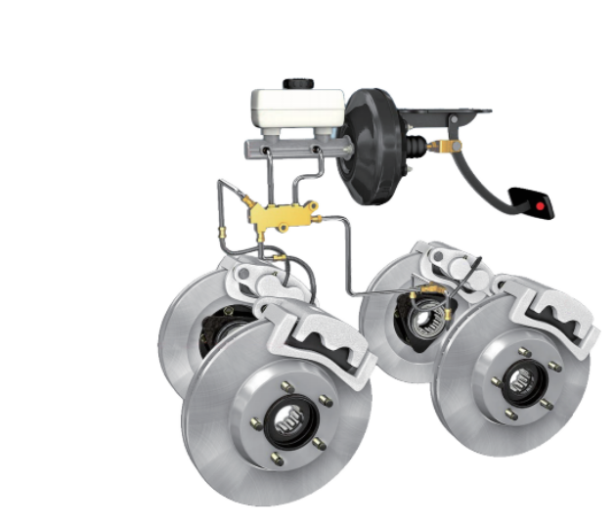
Several signals have emerged simultaneously in recent years. OEMs have begun checking their localization lists item by item; annual cost-reduction targets cascade down onto minor consumable parts; and newly launched brake programs now encounter electro-hydraulic braking (EHB), electro-mechanical braking (EMB), and lightweight structures. The guide-pin grease position has landed on the list of items to be re-evaluated.
The Cost Savings Are Not in the Grease Price
The guide pin does not carry the clamping load; its job is to let the caliper body slide on the bracket and return. Its travel is a few millimeters, it moves dozens of times a day, and stays still the rest of the time. These characteristics determine how it fails: because it bears no pressure, failure is not fracture; because it undergoes fretting, the oil film stays in boundary lubrication for long periods; and because it sits idle for long stretches, the grease must neither bleed out nor harden dry. Neither the assembly line nor the end-of-line test can detect it—it only shows up after tens of thousands of kilometers.
By then the symptoms are: drag torque gradually rising, the caliper not returning crisply, and uneven brake-pad wear. On a pure-electric vehicle, drag is a permanent resistance that directly eats into range—visible right on the dashboard.
Grease is a tiny fraction of caliper cost; what you save on unit purchase price is on the order of a few tenths of a yuan. The range loss, after-sales claims, and line-stoppage handling caused by drag are an entirely different order of magnitude. For this position, the bulk of cost reduction comes from reducing quality losses and avoiding repeated validation. The unit price must come down too—annual cost reduction is a hard mandate—and there is indeed a real price gap between mature imported grades and domestic ones; that part is genuine.
Localization Stalls at the Validation Data Chain
What blocks guide-pin grease localization is the data package that must be submitted after substitution.
Switching grease on a caliper already in production means re-running validation: EPDM immersion, low-temperature torque, bench durability, salt-spray and humidity-heat, and vehicle road testing—each with its own cycle, while project milestones are scheduled backward. The weaknesses of imported grease surface right here: lead times follow overseas production schedules, counted in months; if the formula needs adjusting, the domestic agent relays it upward, and the back-and-forth takes weeks.
Whether substitution can actually happen depends on whether the new supplier can deliver the complete data set in one go: compatibility reports, same-condition benchmarking, batch-consistency records, and bench-test cooperation capability. Break one link in the data chain, and the engineer has to run the tests themselves; the person signing the change order will naturally choose the safe path.
On rust and corrosion protection, we can speak directly with existing measured data. After 168 hours of humidity-heat plus 192 hours of salt spray, the pin hole, pin shaft, and contact surfaces show rust protection equivalent to the imported solution—the report goes straight into the customer’s validation package.
For New-Project Selection, the Window Is the Prototype Stage
EMB’s validation criteria are far stricter than those of traditional hydraulic systems. Per the industry durability-test specification, the main test must reach 3.1 million cycles, with an additional 2.2 million cycles for the supplementary test, and temperatures are spread proportionally between −40°C and 105°C. At that scale, the guide pin is pulled back and forth millions of times, and the grease’s adhesion-retention ability and post-durability return consistency both come to light. Regenerative braking now handles most of the daily deceleration, so hydraulic actuation frequency is decreasing—but drag is unrelated to actuation frequency; it hangs on the vehicle every day, consuming range.
Lightweighting is another variable. Once aluminum calipers and new bracket materials come in, the material combination of the guide-pin pair changes too; the selection experience accumulated in the steel-on-steel era cannot be copied directly, and the boundaries of compatibility and fretting wear must be reconfirmed.
New projects are also where domestic grease finds it easiest to enter—no legacy baggage to carry, and selection is done right the first time. The window is the prototype stage; once it passes, what follows is the change-order process.
A Few Data Items to Request Up Front
When requesting data from suppliers, these items are best put on paper during the selection stage.
EPDM compatibility comes first. Dust boots are basically all made of EPDM; if the grease’s base oil swells or hardens it, the seal fails—what matters is the volume change and hardness change after immersion. Low-temperature torque determines the feel of the first brake press on a northern winter morning; at minus twenty to thirty degrees, this data does not lie. After salt-spray and humidity-heat cycling, the pin and hole must not rust; wherever brake fluid is involved in assembly, compatibility must be confirmed together.
Oudeli’s Matching Grades for Guide Pins
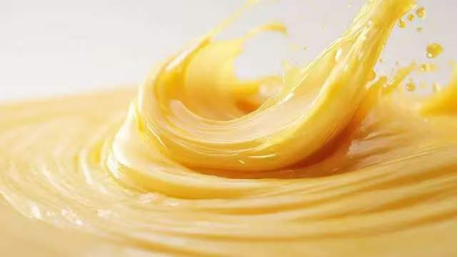
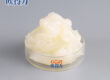
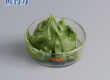
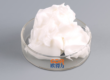
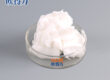
Oudeli matches two grades to the guide pin. ODR-C8003 is compatible with EPDM dust boots and brake fluid, has passed OEM validation, and is in Tier 1 volume production use; ODR-CW930 has been used in the aftermarket for 20 years. Both grades have ready-made material-compatibility, durability, and salt-spray/humidity-heat data; the caliper maker does a same-condition confirmation, and if it matches, a change can be proposed without running a full validation round from scratch.